Coordinating Booster Pledges with Official Payouts and Uniform Restocking Timelines Across Interscholastic Basketball Associations
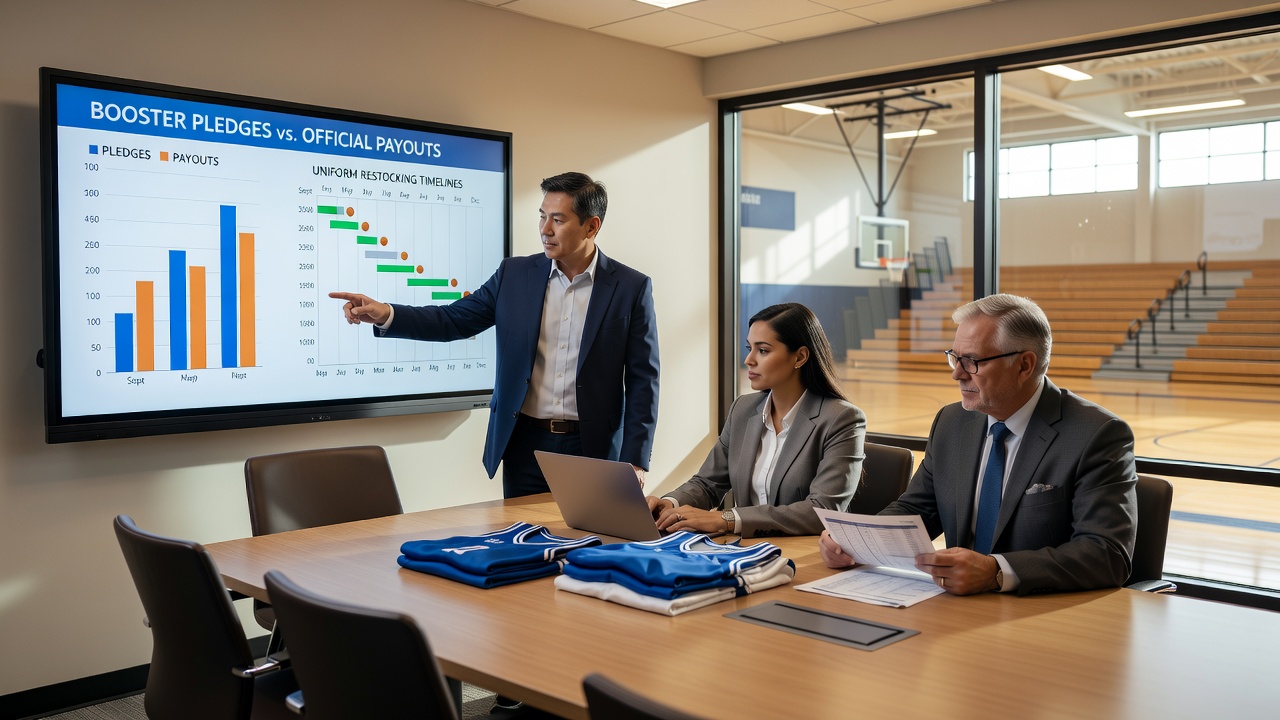
Associations that oversee high school basketball programs face ongoing demands to align booster group contributions with scheduled official payments and equipment replacement cycles, a process that requires precise tracking across multiple member schools and regional conferences. Data from state athletic organizations indicates these groups handle thousands of individual pledges each season while meeting payroll obligations for referees, scorekeepers, and event staff.
Booster Pledge Structures in Regional Networks
Booster organizations typically commit funds through annual drives, sponsorship tiers, and event-based collections that feed into central association accounts, and researchers at university sports management programs have documented how these inflows support everything from travel subsidies to facility upgrades. Many associations set pledge deadlines in early fall to allow for budget finalization before the winter season begins, which creates a predictable revenue stream that administrators cross-reference against projected expenses.
Uniform reporting templates help standardize pledge documentation, and organizations in states such as California and Texas have adopted shared digital ledgers that flag discrepancies within days of submission. Observers note that this approach reduces reconciliation delays that previously stretched into postseason periods.
Aligning Official Payout Schedules
Official payouts cover game-day personnel and league administrative costs, with most associations releasing funds on bi-weekly or monthly cycles that coincide with completed contest reports. According to figures released by the National Federation of State High School Associations, referee compensation alone accounts for roughly 35 percent of typical operating budgets in mid-sized conferences. Systems that integrate pledge receipts with these payout calendars allow treasurers to verify available balances before authorizing disbursements, a step that prevents overdrafts during peak tournament months.

Associations in the Midwest have implemented automated triggers that release official payments only after verified pledge deposits clear, and similar protocols appear in Canadian provincial bodies that coordinate interscholastic play. This linkage ensures cash availability while maintaining audit trails required by nonprofit compliance rules.
Uniform Restocking Timelines and Inventory Planning
Restocking cycles for uniforms, balls, and training gear follow multi-year replacement schedules that associations publish in advance, often spanning three to five seasons to spread capital outlays evenly. Schools submit inventory audits each spring, after which central purchasing teams negotiate bulk orders timed to summer delivery windows. Studies conducted by European sports science centers have shown that synchronized restocking across leagues lowers per-unit costs by an average of 12 percent compared with independent school purchases.
June 2026 marks the next major review period for several national associations that plan to adjust restocking guidelines based on updated supplier contracts, and participating conferences receive preliminary timelines six months prior. These schedules intersect directly with pledge collection windows so that booster funds earmarked for equipment arrive before vendor invoices become due.
Integrated Coordination Practices
Digital platforms now connect pledge tracking modules with payout ledgers and inventory calendars, allowing authorized users to view real-time balances across all three categories. Regional networks in Australia and New Zealand have reported successful adoption of similar unified systems for their school sports programs, where seasonal cash flow remains a persistent challenge. Data shows that associations using these tools complete year-end audits an average of three weeks faster than those relying on separate spreadsheets.
Training sessions for association staff emphasize matching pledge categories to specific line items, such as allocating a portion of booster dollars exclusively to referee stipends while reserving another segment for uniform replacements. This categorization reduces the risk of mid-season reallocations that disrupt planned timelines.
Conclusion
Coordinated management of booster pledges, official payouts, and restocking schedules continues to evolve as more associations adopt shared platforms that link these functions. State and provincial organizations continue to refine their procedures ahead of the June 2026 planning cycle, drawing on performance data collected from prior seasons to adjust timelines and reporting requirements. The result is a more consistent framework that supports both financial oversight and operational continuity across interscholastic basketball programs.