Coordinating Stipends, Inventory Cycles, and Pledges in Statewide Track and Field Networks
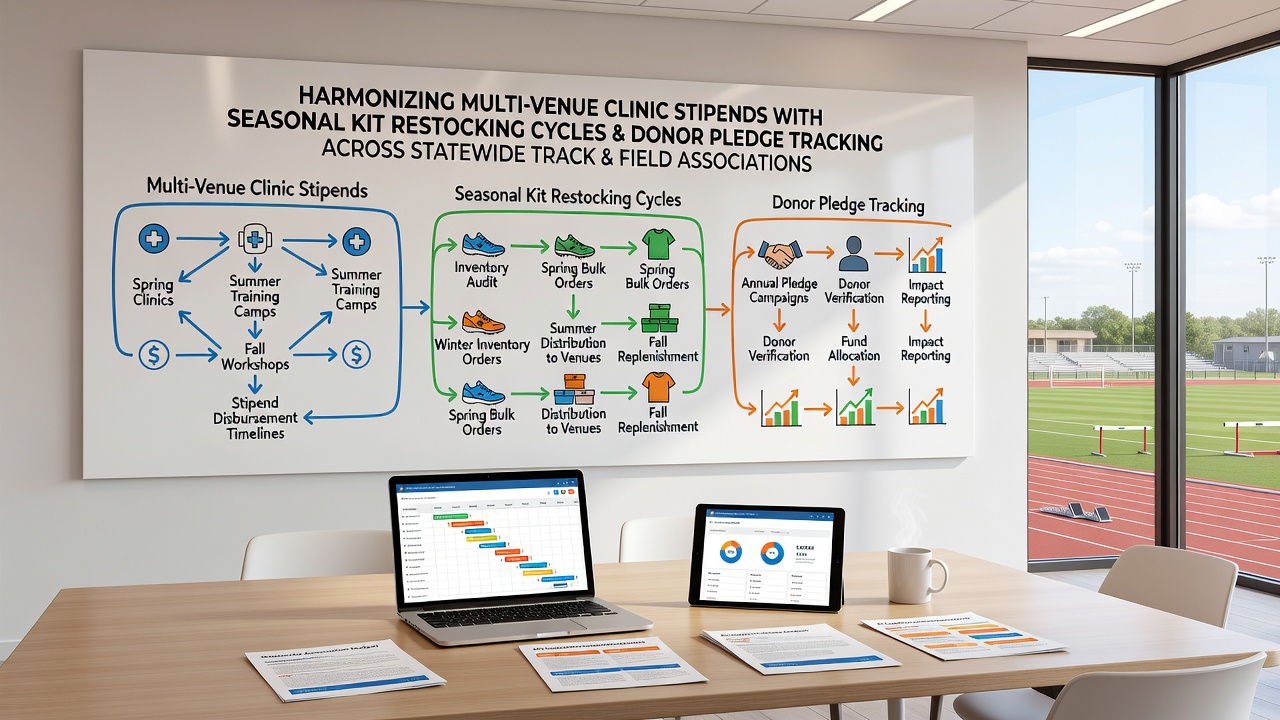
Statewide track and field associations manage clinic stipends across scattered venues while aligning those payments with seasonal equipment purchases and donor commitment records, and observers note that synchronization becomes essential when events span urban facilities, rural fields, and university campuses. Associations handle stipends for coaches and specialists who deliver technique sessions at different sites, yet payment timing must match availability of funds from registrations and grants. Seasonal kit restocking adds another layer because uniforms, spikes, and training aids arrive in bulk orders timed to pre-season periods, while donor pledges require ongoing verification to confirm delivery of promised amounts.
Multi-Venue Clinic Operations and Stipend Distribution
Coaches conduct clinics at three or more locations per month in many associations, and stipends vary based on session length, participant numbers, and venue fees. One Midwest association processes payments through a central ledger that pulls data from each site’s attendance logs, which allows finance staff to release funds on the same schedule every quarter. Data from Athletics Canada shows regional bodies increasingly consolidate these records to reduce delays that previously stretched into weeks when paperwork moved by mail between districts. Systems flag discrepancies automatically when a clinic at one venue reports higher attendance than expected, prompting review before the next stipend batch clears.
Seasonal Kit Restocking and Inventory Alignment
Associations typically place kit orders in late winter for spring delivery and again in early summer ahead of championship season, and these cycles must coordinate with stipend outflows because both draw from the same operating accounts. Inventory software tracks stock levels against upcoming events, so restocking happens only after confirmation that clinic revenue has posted. In June 2026 several state groups plan to shift their second annual order window forward by two weeks to avoid overlapping with peak donation processing periods, according to planning documents circulated among federation treasurers. This adjustment prevents cash shortfalls when multiple large disbursements hit simultaneously.
Suppliers often require deposits thirty days in advance, which forces associations to forecast stipend commitments for clinics scheduled two months out. Those forecasts rely on historical attendance figures and current registration trends, and integrated platforms update projections daily as new sign-ups arrive.
Donor Pledge Tracking Across Regions
Donors commit funds through annual pledges, event sponsorships, or targeted gifts for equipment, and associations maintain separate tracking for each category to satisfy reporting requirements. Pledge management tools record promised amounts, payment schedules, and fulfillment status, which helps treasurers anticipate available cash for both stipends and kit purchases. A western state federation links pledge data directly to its accounts receivable module, so any shortfall in expected donations triggers alerts before kit orders finalize. Figures from a 2025 European Athletics financial overview indicate that federations using linked pledge systems reduced uncollected commitments by 18 percent compared with prior manual methods.
Integration of Payment, Inventory, and Pledge Systems

Associations now connect stipend ledgers, inventory calendars, and pledge databases through shared platforms that update in real time, and this linkage allows staff to view projected balances across all three areas on one screen. When a clinic at a northern venue books extra sessions, the system recalculates available funds after subtracting scheduled kit deposits and pledged amounts still pending. Research from Sport New Zealand highlights similar coordination in regional athletics bodies, where unified dashboards cut reconciliation time from five days to under two. Staff can adjust order quantities or reschedule non-critical clinics if pledge collections lag behind projections.
Payment processors feed transaction data directly into the central system, which then cross-checks against both stipend calendars and restocking timelines. Donor portals let contributors view their pledge status and upcoming installments, reducing inquiries that once consumed staff hours each month.
Reporting and Compliance Across State Lines
State associations submit consolidated financial reports to national bodies, and synchronized records simplify preparation of those filings because stipend totals, kit expenditures, and pledge realizations appear in consistent formats. Compliance officers review audit trails generated automatically when any entry changes across the three modules. Associations in neighboring states sometimes share platform templates, which speeds adoption for smaller groups lacking dedicated IT support. Data from the Australian Sports Commission reveals federations that adopted integrated reporting tools completed annual submissions an average of three weeks earlier than those relying on separate spreadsheets.
Conclusion
Statewide track and field associations continue refining connections between multi-venue stipend payments, seasonal kit cycles, and donor pledge monitoring through shared digital systems. These connections produce consistent cash flow visibility and support timely fulfillment of both operational needs and donor commitments. As associations prepare for the 2026 season, updated scheduling of orders and payments reflects ongoing efforts to keep all three financial streams aligned across dispersed venues and participant bases.