Integrating Vendor Reimbursement Timelines with Tryout Fee Collections in Provincial Fencing Academies
 Provincial fencing academies across Canada coordinate tryout fee collections with vendor reimbursement schedules through specialized financial platforms that align collection cycles and payout periods. These systems track incoming payments from prospective athletes while managing outgoing funds to suppliers of masks, jackets, and scoring equipment. Observers note that synchronization reduces cash flow gaps because tryout fees often arrive in concentrated windows during spring and fall recruitment periods. Administrators in provinces such as Ontario, British Columbia, and Quebec report that integrated tools allow them to set reimbursement triggers based on actual fee receipt dates rather than fixed calendar assumptions. When a cohort of tryout participants completes payments, the platform automatically releases portions of those funds to approved vendors according to pre-established contract terms. Research from Sport Canada indicates that such coordination improves compliance with nonprofit reporting requirements because transaction logs remain centralized and timestamped.
Tryout Fee Structures and Collection Patterns
Tryout fees in provincial fencing academies typically cover administrative processing, temporary equipment access, and coaching evaluations. Data from regional federations shows that average fees range from 75 to 150 CAD per participant, with higher amounts applying to multi-day assessment events. Collections usually peak in May and September, creating predictable revenue spikes that platforms can match against vendor invoice due dates.
Payment platforms enable academies to issue digital invoices that include automated reminders and partial payment options. Those who have implemented these features observe that completion rates rise when families receive clear timelines linking their payments directly to equipment orders. In June 2026 several provincial bodies plan to standardize fee reporting formats, which will require platforms to export data in formats compatible with both federal grant applications and vendor reconciliation files.
Vendor Reimbursement Timelines and Contract Alignment
Vendors supplying fencing gear often operate on 30- to 60-day payment terms, yet academies receive tryout revenue in irregular bursts. Integrated systems address this mismatch by creating conditional release rules: funds earmarked for a specific vendor become available only after corresponding fee batches clear. This approach prevents premature payouts while ensuring suppliers receive compensation once academy cash positions stabilize.
One study of amateur sports organizations conducted by the University of Toronto's Faculty of Kinesiology found that academies using timeline-linked platforms reduced average vendor payment delays by 18 days. The same research noted that contract clauses specifying reimbursement windows tied to event revenue streams became easier to enforce when digital tools provided real-time visibility into collection progress.
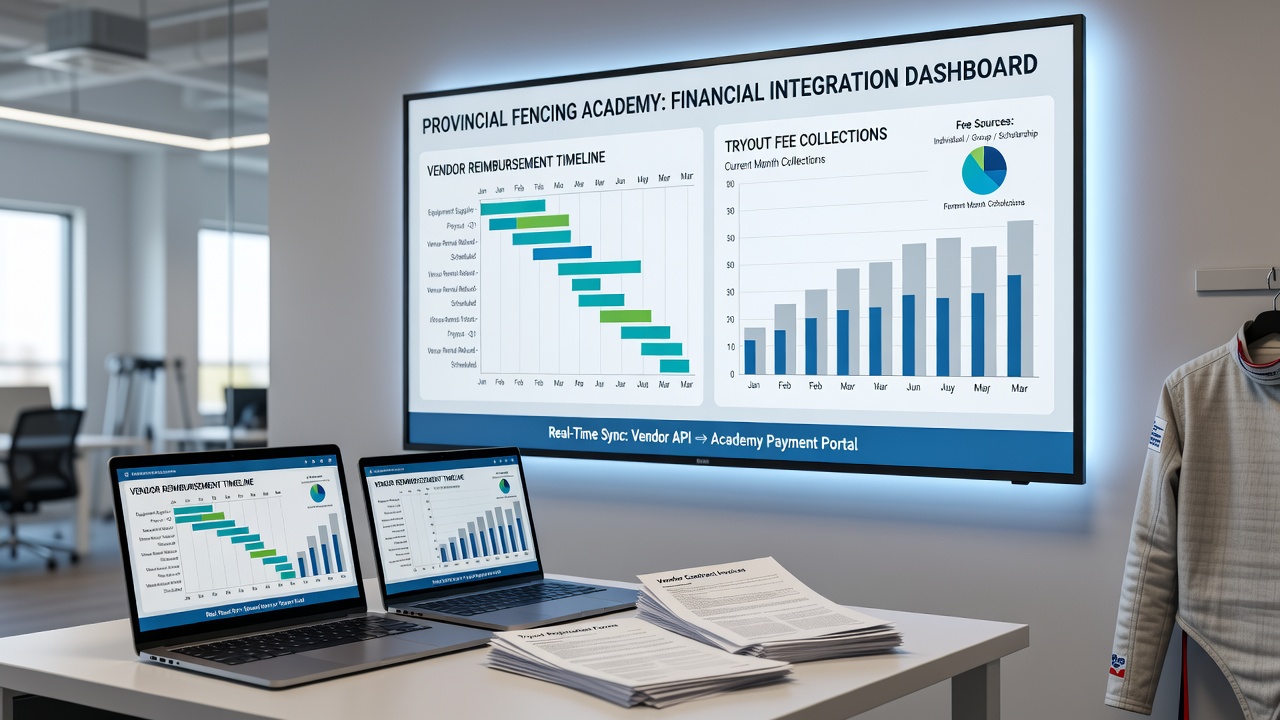
Platform Features Supporting Integration
Modern sports finance platforms offer modules that connect registration portals directly to accounts payable functions. Academy staff can define rules that allocate percentages of collected tryout fees toward specific vendor categories, such as protective equipment versus training mats. Automated notifications alert administrators when projected reimbursements approach contract deadlines, allowing adjustments before penalties accrue.
According to figures released by the Canadian Fencing Federation, academies adopting these coordinated systems have documented a 22 percent reduction in manual reconciliation hours during peak recruitment seasons. The platforms also generate audit trails that satisfy both provincial sport authority reviews and vendor contract audits without requiring separate spreadsheets for each function.
Case Examples from Provincial Networks
In Alberta, one regional academy linked its May tryout cycle to a vendor agreement for imported blades. The platform released 40 percent of collected fees within five business days of the collection close, satisfying the supplier's early-payment discount terms. Observers in the province noted that similar linkages helped smaller academies maintain steady equipment inventories without drawing on operating reserves.
Quebec academies have tested parallel integrations during their fall recruitment windows. By mapping vendor payout schedules to fee collection milestones, administrators avoided situations where equipment arrived before sufficient funds accumulated. Those who've studied these implementations report that the approach scales effectively when multiple academies share the same platform instance managed by a provincial association.
Regulatory and Reporting Considerations
Provincial fencing organizations must align financial practices with both sport-specific governance rules and broader nonprofit standards. Integrated platforms facilitate this alignment by producing unified reports that detail fee origins and reimbursement destinations. In preparation for June 2026 reporting cycles, several federations have requested that platforms incorporate fields for categorizing tryout revenue separately from lesson fees and competition entries.
External verification becomes simpler when transaction data flows through a single system rather than multiple disconnected applications. Research published by the Canadian Centre for Ethics in Sport highlights that transparent linkage between revenue sources and expenditures strengthens stakeholder confidence in academy operations.
Conclusion
Provincial fencing academies continue to refine the connection between tryout fee inflows and vendor reimbursement outflows through purpose-built digital coordination. The approach relies on configurable rules, automated triggers, and centralized reporting that match revenue timing with contractual obligations. As June 2026 approaches, updates to reporting standards are expected to reinforce the value of these integrated timelines across regional networks.