Subscription Synchronization Across Amateur Athletic Circuits for Entry Processing and Supply Procurement
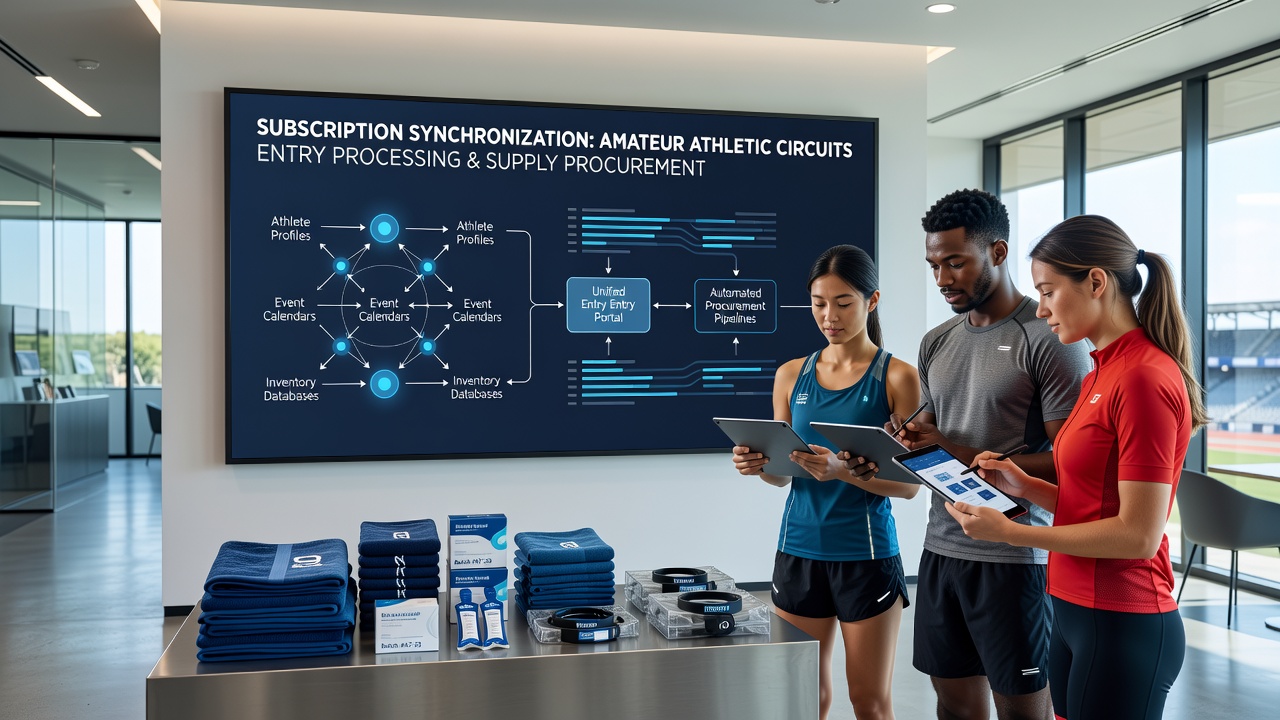
Amateur athletic circuits rely on coordinated subscription frameworks that align recurring payments with event registrations and material acquisitions, and these systems connect separate regional networks so that membership renewals trigger automatic entry processing while also feeding data into procurement schedules for uniforms, equipment, and venue supplies.
Multiple circuits share standardized data fields that allow a single subscription update to propagate across platforms, and this reduces duplicate entries for athletes who compete in overlapping events while giving suppliers advance notice of bulk orders required for upcoming seasons.
Core Components of Cross-Circuit Subscription Systems
Entry processing modules pull athlete profiles, payment histories, and eligibility records from a central ledger, and procurement modules then reference the same ledger to forecast quantities of items such as timing chips, safety gear, and printed materials needed for each sanctioned meet. Observers note that circuits using these shared ledgers report fewer mismatches between registered participants and ordered supplies, and data from regional federations shows processing times for combined entry-and-order batches dropping by measurable margins after adoption.
Supply vendors receive aggregated forecasts that update in real time as new subscriptions activate or lapse, and this flow supports just-in-time manufacturing runs rather than large speculative inventories. Those who manage procurement across circuits indicate that synchronization also flags seasonal spikes, for instance when multiple circuits schedule championship weekends within the same month.
Implementation Patterns Observed in 2026
In July 2026 several inter-regional track and field networks completed phased rollouts of unified subscription gateways, and these gateways automatically converted annual renewal confirmations into entry confirmations for the fall cross-country slate while simultaneously queuing apparel restocking orders with approved vendors. The gateways further routed payment confirmations to compliance dashboards used by nonprofit league treasurers, and this reduced manual reconciliation steps that previously required separate spreadsheets for each circuit.
Similar patterns appeared in multi-sport amateur organizations where one subscription tier covered both local league play and regional qualifier access, and procurement teams accessed the same tier data to time deliveries of field maintenance supplies ahead of peak competition periods. Figures from participating circuits reveal that synchronized systems handled thousands of combined transactions per month without requiring additional staff for data entry.

Data Exchange Standards and Security Protocols
Technical standards adopted by these circuits specify encrypted API endpoints that transmit only the minimum required fields for each function, and independent audits confirm that personally identifiable information stays segmented from vendor-facing procurement views. Research published by the Canadian Sport Institute outlines how such segmented data flows support both financial reporting and athlete privacy requirements across provincial boundaries.
Another study conducted by researchers at the Sports Science Institute of South Africa examined subscription synchronization in endurance sports circuits and documented consistent reductions in order discrepancies when entry data and supply forecasts shared a common timestamp. The study further noted that circuits maintained separate ledgers for sensitive financial details while still achieving real-time synchronization on non-sensitive fields such as item quantities and delivery windows.
Operational Outcomes Across Multiple Circuits
Circuits that adopted synchronized platforms recorded fewer late or duplicate supply orders because procurement triggers activated as soon as entry counts reached preset thresholds, and this automation allowed organizers to negotiate volume discounts with greater certainty. Athletes experienced shorter confirmation windows for both event participation and equipment sizing, since the same subscription record populated both systems.
Regional administrators report that monthly reconciliation reports now consolidate data from all connected circuits into single outputs, and this format simplifies reporting to grant agencies and insurance carriers that require participation and expenditure totals. The approach also supports contingency planning when weather or venue changes force last-minute adjustments to supply quantities.
Conclusion
Subscription synchronization continues to link entry processing with supply procurement across amateur athletic circuits by maintaining shared data standards and automated triggers that update both participant lists and vendor orders without repeated manual intervention. Circuits that have completed integration show measurable improvements in processing speed and order accuracy, and the pattern established through 2026 rollouts provides a template for additional regional networks seeking similar coordination.