Timing Vendor Settlements with Peak Registration Windows in Amateur Table Tennis Circuits
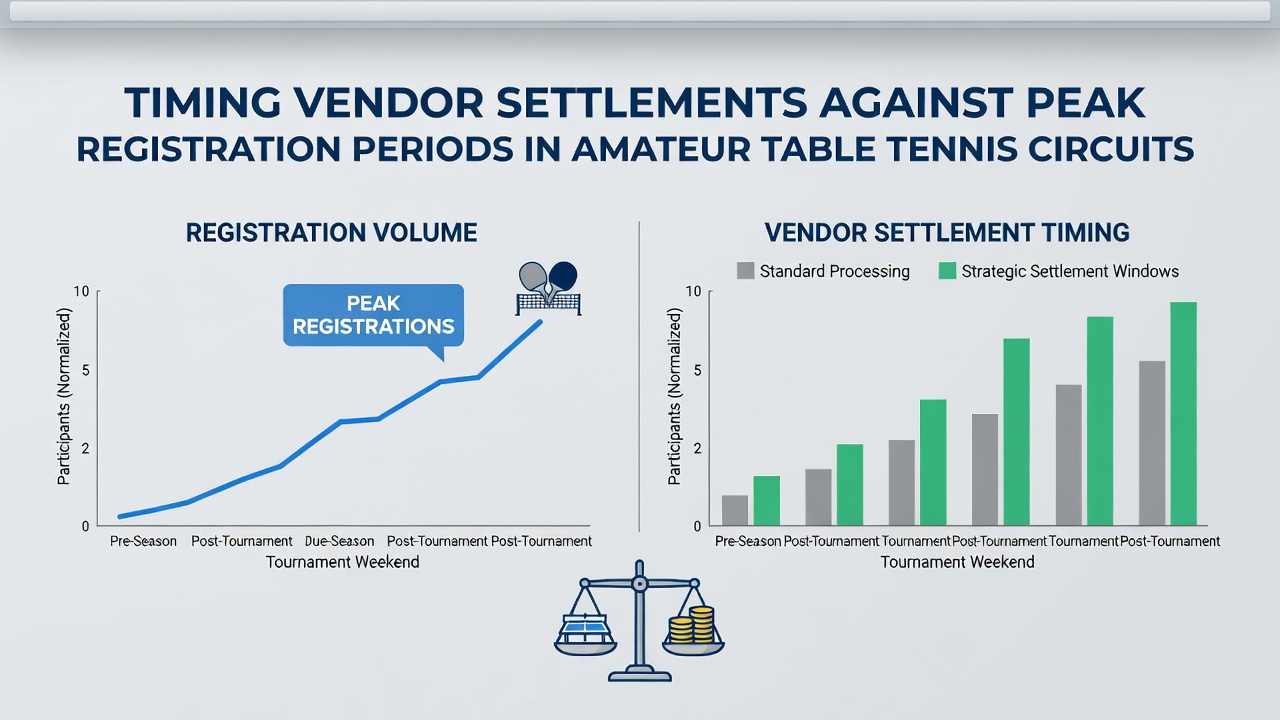 Amateur table tennis circuits operate on tight seasonal calendars where registration surges drive most annual revenue, and those same windows dictate when vendor settlements occur. Local leagues and regional federations collect entry fees, equipment orders, and clinic payments during brief periods that typically cluster before major tournaments or new seasons begin, then they schedule payouts to ball suppliers, table maintainers, and apparel vendors to maintain steady cash flow without disrupting operations. Data from governing bodies shows these peaks often align with early spring and late summer, creating predictable patterns that financial platforms now track automatically. Observers note that when circuits fail to synchronize settlements, vendors experience delays that can stretch weeks beyond delivery dates, while clubs hold onto funds longer than necessary.
Understanding Registration Surges in Table Tennis Circuits
Peak registration periods in amateur table tennis emerge from structured tournament calendars set by national and regional associations. Most circuits open sign-ups three to six weeks before events, and data collected across multiple federations indicates 60 to 70 percent of annual participant fees arrive during these concentrated windows. Those inflows cover not only competition entries but also bundled purchases such as balls, paddles, and court time allocations.
July 2026 marks a notable shift for several North American circuits, as updated digital registration systems come online to handle simultaneous vendor invoicing during those same high-volume weeks. European federations have already implemented similar timing protocols, and early reports suggest reduced settlement lags once the new tools integrate with existing league software.
Aligning Vendor Payout Schedules
Vendors supplying amateur circuits range from equipment manufacturers to local printing services that produce scorecards and banners. Settlements traditionally followed manual reconciliation cycles that lagged behind registration deadlines by ten to fourteen days. Integrated platforms now match incoming registration revenue directly to pending vendor invoices, releasing funds on the same day collections clear when thresholds are met.
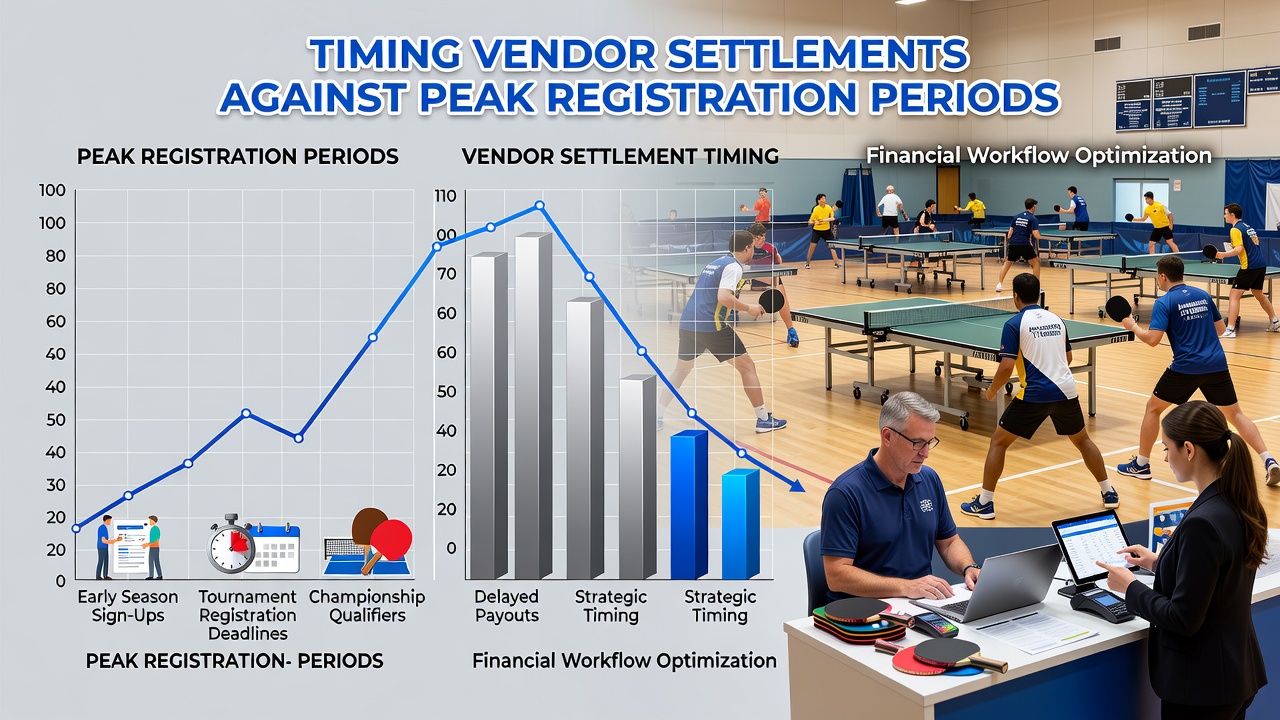
One mid-sized regional circuit in Canada reported that after switching to automated reconciliation, average vendor payment times dropped from eighteen days to five days during the 2025 spring peak. Similar patterns appear in Australian state-level leagues, where officials coordinate apparel restocking orders with registration close dates to avoid inventory gaps.
Digital Tools Supporting Synchronization
Cloud-based payment systems designed for amateur sports allow organizers to set rules that trigger vendor payouts once registration targets are reached. These tools log every entry fee, equipment bundle sale, and clinic sign-up, then apply the same data stream to calculate owed amounts to each supplier. The result is a single ledger that updates in real time rather than separate spreadsheets maintained by different staff members.
According to reports from the Australian Sports Commission, circuits using these platforms reduced administrative hours spent on reconciliation by roughly forty percent during peak periods. In parallel, the Sport Canada framework highlights how timing vendor settlements against registration data improves compliance tracking for nonprofit leagues that must file annual financial statements.
Case Examples from Regional Circuits
Take one Midwest U.S. table tennis association that coordinates three annual tournaments. Registration opens in late February for the spring series, and vendor contracts for tables and nets are scheduled for payout the week after the final entry deadline. The league's platform automatically holds settlement batches until 85 percent of projected revenue arrives, then releases payments in batches that match actual collections.
Another example comes from a Scandinavian regional circuit where July and August registration windows overlap with equipment restocking needs ahead of the fall season. Organizers there set vendor settlement dates three days after each registration close, allowing suppliers to receive funds before shipping new stock. Those adjustments reduced out-of-stock issues during the 2025 season compared with prior years.
Challenges and Adjustments
Even with improved tools, circuits still encounter mismatches when registration numbers fall short of projections or when vendors submit invoices outside the automated rules. Staff must review exception reports weekly during peak months to catch these discrepancies. Some federations now require vendors to submit digital invoices through the same platform used for registration to keep all data in one system.
Observers note that circuits running multiple overlapping events face additional complexity because registration windows can overlap with settlement cycles from earlier tournaments. Clear rule sets that prioritize older invoices help maintain order without manual intervention in most cases.
Conclusion
Amateur table tennis circuits continue to refine how they time vendor settlements against registration peaks. Digital platforms that link these two processes reduce delays, improve compliance, and free organizers to focus on event delivery rather than payment chasing. As more regions adopt synchronized systems ahead of the July 2026 cycle, the pattern of faster, more predictable payouts is expected to spread across additional federations and leagues.